Opening Note: Positioning Myself in the Research
It is a daunting task to start something new and even more daunting to make it public. I cannot help but wonder: who are you, person reading my essays? What are you going to think about it? Writing is disconnected from the audience. In this case, a screen separates us; you might be miles away from where I wrote those lines. I will not be able to see your face or body language as you read these lines. I will not be able to gather any information on whether you enjoy or thoroughly dislike my writing. So how can I possibly try to suit your taste? Pleasing an unknown readership seems to be an impossible task, but also one that is diverting me from the aim of my writings. With these short essays, which I endeavour to post on an (ir)regular basis, I seek to share the knowledge that I believe matters. This mostly includes the material I encounter in my day-to-day job as a researcher, along with my own reflections and thought processes I encounter behind my desk, on a walk in the park looking at trees and people, on a ‘wild’ swim, or when hill-walking in my surroundings areas: the Peak and Lake Districts, North Wales, and further away in the Scottish Highlands. Such thoughts are informed and structured by the last five years of my life spent enrolled in various universities’ degree programs (BA, MPhil, PhD, see CV).
What do I mean by ‘the knowledge that matters’, though? Obviously, this is very subjective. What matters to me might not be of relevance to you, bringing me to what I want to stress in this opening note: the importance of acknowledging my positionality. In academic contexts, the necessity of considering the researcher’s positionality in the research process has become paramount in response to researchers claiming universal truths while failing to acknowledge their own position in the world. That is, acknowledging how their upbringing, culture, gender, race, and language influence how they perceive and understand the world. For example, early anthropological work and colonial writers during the ‘Age of Discovery’, starting in the 15th century, commonly describe Indigenous peoples as ‘barbaric’, ‘savage’ or ‘primitive’. These are not neutral observations; rather, such interpretations are shaped by deeply racist assumptions emanating from a Eurocentric worldview which understands itself as the standard for civilisation, considering any other way of being inferior. Such a belief in European civilisation’s superiority is so pervasive that the ‘Age of Discovery’ is still taught in schools today, perpetuating the myth of the terra nullius (the empty land), which negates the very existence of Indigenous peoples in colonised lands. So, for whom was the discovery? In the context of the American continent, Native Americans inhabited the land long before Christopher Columbus and his crew claimed ownership of the land, which was not theirs to claim. It was never ‘discovery’, it was theft, depriving Indigenous people of their land, culture and ways of being. Yet, teaching kids in schools about the morbid history of the ‘Age of Theft, Violence and Genocide’ is not as appealing for many European countries, which still rely on neo-colonial relations with former colonies. My point is that to properly evaluate knowledge and form an informed opinion about a matter, the reader must know who the author is, because no reality is universal nor unique but multiple and intricate. As the author, my worldview, history, culture, and intentions shape everything, from the topics I choose to explore to the literature I draw on and ultimately to the conclusions I reach.
It is therefore essential for me to acknowledge how my position in the world shapes the research process. With a series of short essays, I will be drawing from my PhD research, which explores ways of living and being with the more-than-human, a term referring to all lifeforms and forces beyond the human, such as animals, plants, fungi, bodies of water, etc, recognising that humans are part of a larger living system. I seek to explore and share with you how one can live beyond Western ideas of a separation between ‘human’ and ‘nature’, which legitimates the exploitation of the latter. Drawing on Indigenous knowledges – Gaelic and Māori – I explore themes of interdependence, holistic living, and care with more-than-human. I thus believe it is fundamental, for the sake of not reproducing the harm of the past, to acknowledge exploring these themes from my viewpoint.
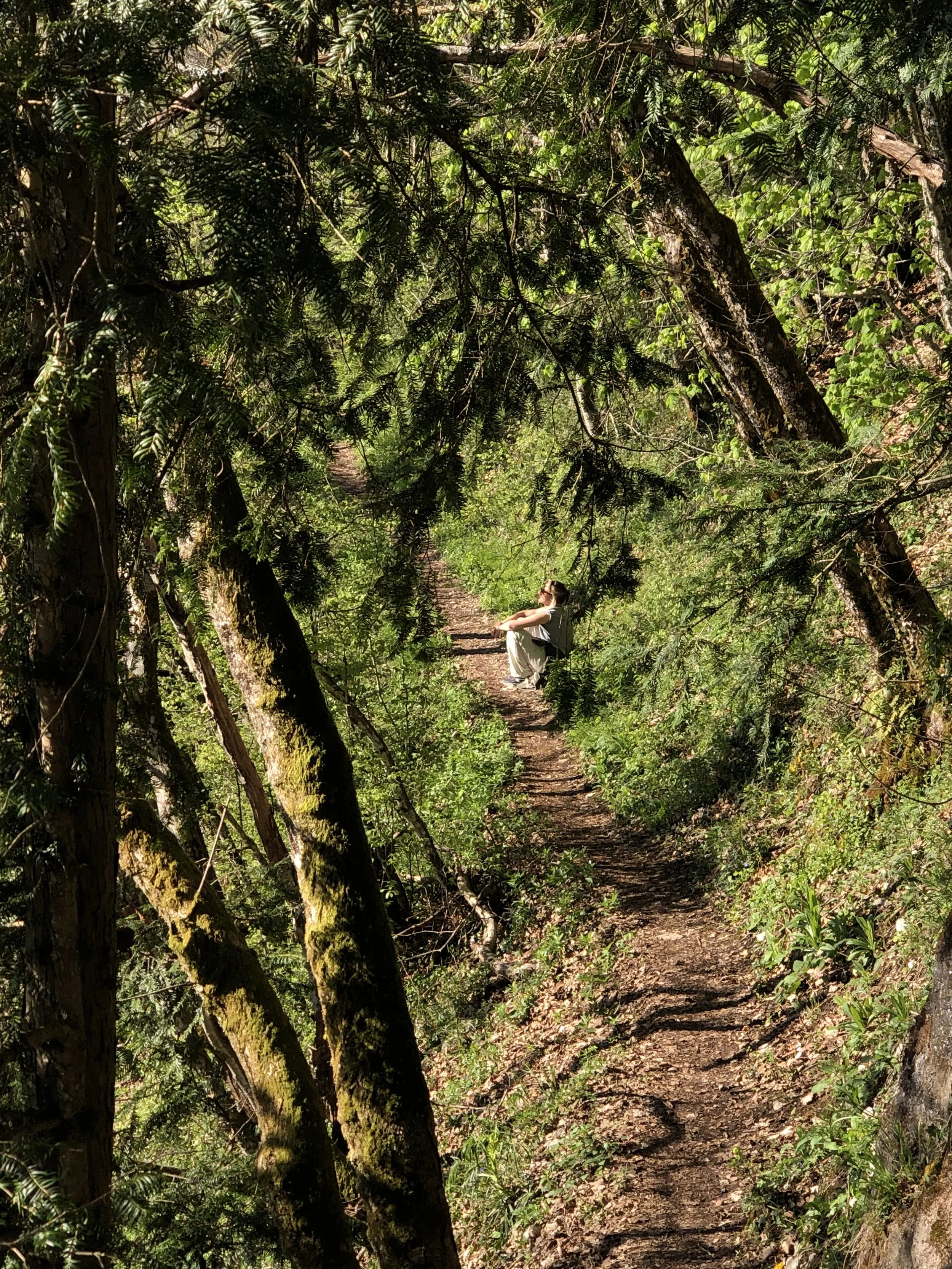
The viewpoint of a young woman who grew up in Paris, France, in an urban setting, and moved away from home to pursue higher education in the UK (England). Leaving home at the age of 17 was a transformative experience, which I believe contributed to my criticality. It was only by leaving that I began to unlearn the social conditioning I had never questioned and relearn by engaging with the knowledges I valued rather than the one imposed on me. This is when I started my engagement with feminism, the most eye-opening journey I have embarked on so far, which was so removed from my tight, conservative, catholic upbringing, so removed that my grandma told me that in her time, saying the word ‘feminism’ was unthinkable. Feminism opened my eyes to how every single aspect of life is gendered. I am (and probably always will be) on the journey of disobeying patriarchy to live free of its alienating, exploitative and harmful expectations of how a woman should be. Yet, I recognise that, in my journey, I have mainly engaged with Western feminism, which is under scrutiny for neglecting how racism, colonialism, class, disability, and sexuality shape women’s lives. My PhD is the first research project in which I engage with worldviews and knowledge that are not from my culture.
To avoid appropriating such cultures, while showing appreciation and seeking lessons and guidance from these ways of being, it is primordial to acknowledge that I am not from any of the Indigenous communities I am researching. However, I believe that research should be reciprocal, so if I draw on people’s knowledge to inform my research without being part of their community, I cannot give back ‘in kind’, that is, by acts of service to the community, ie. someone agrees to give me an hour of their time for an interview and in exchange I look after their kids for an evening, or cook them a meal, so I ought to give back in some other ways. It is worth noting, though, that all my participants are financially compensated. Yet, I believe I ought to do a little more than this.
Indigenous worldviews have been and continue to be violently repressed to make space for the hegemonic Western cultural, political and economic systems. Therefore, as a form of giving back, I wish to advocate for space for such ways of living and being. May this space start with this website and my writings, and maybe it will then make its way into your mind, influence your way of being, and even inspire others around you. I yearn for a world where people act with more care towards one another, respect each other’s cultures and worldviews. There is enough space for us all. I yearn to learn! Learn how to care for the more-than-human and the Earth that sustains us all. As Westerners, we have almost completely lost such ways of being, but maybe by mobilising Indigenous ways of being, the ones far removed from us and the ones on our doorsteps, we may start awakening ancient wisdom within ourselves, prompting us to be stewards of our own land.
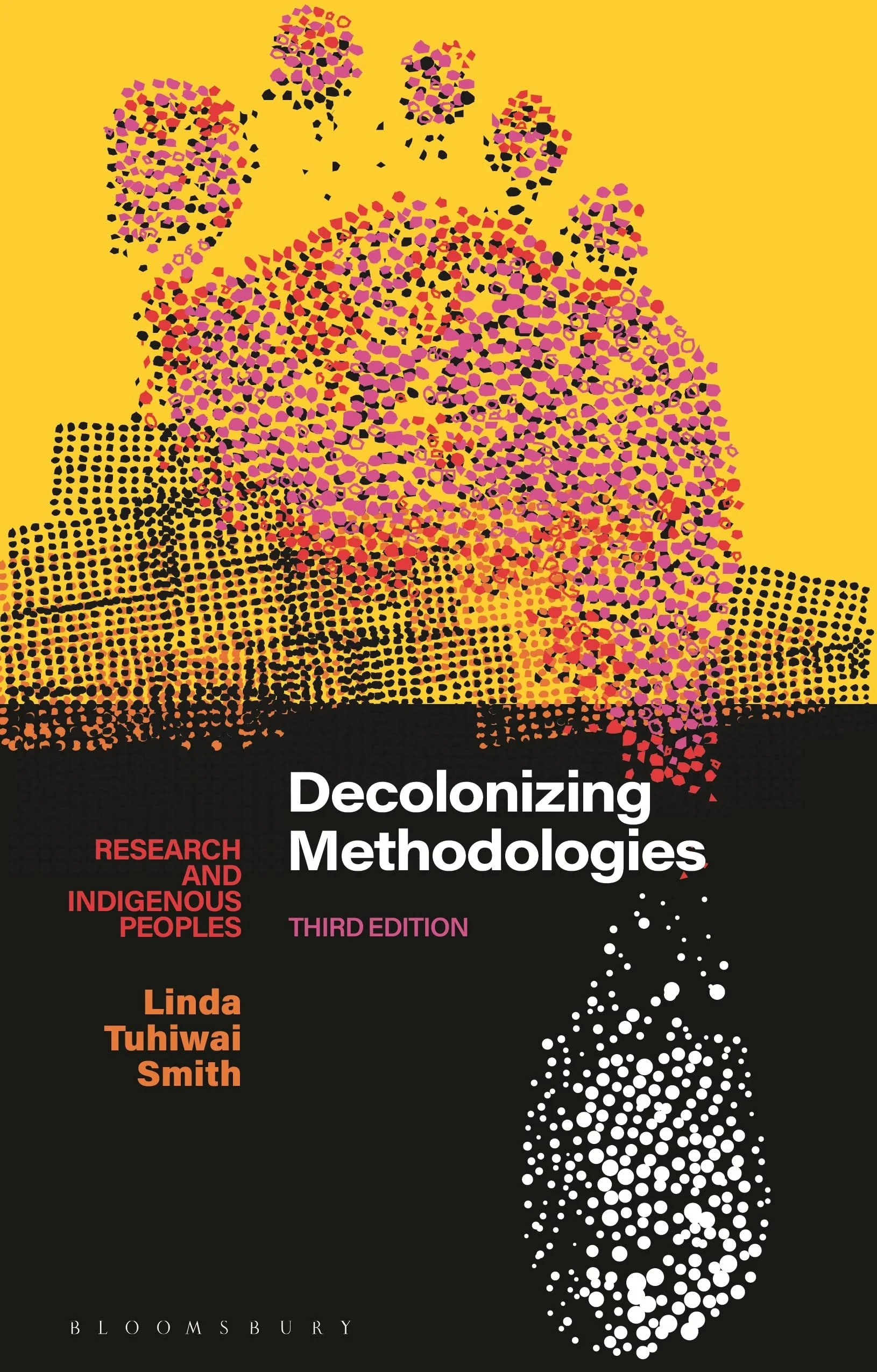
Note: At the end of each essay, I endeavour to share a book, an article, a film or a video for you to engage with. As this is an opening note on my positionality, the book I suggest here is quite academic, though I believe the first few chapters could be of interest to anyone. In her book Decolonising Methodologies: Research and Indigenous Peoples, the Māori author Linda Tuhiwai Smith argues that Western research practices are deeply entangled with colonialism and calls for research frameworks rooted in Indigenous ways of knowing to reclaim agency, dignity, and self-determination. I particularly enjoyed the first two chapters, which explore cocnepts of time, space and history from an Indigenous point of view. The book is available as a free PDF online.