Fieldnotes in Aotearoa (2): Stepping into Reciprocity with the Earth
Author’s note: The ideas and analyses presented here are original work. Readers are welcome to discuss and appropriately cite these ideas, but any use, reproduction, or derivative work should acknowledge the original source in accordance with academic standards and applicable copyright law.
In this article, I move beyond the essential act of recognising our interconnectedness with all beings to explore the consequences of opening our hearts and souls to the other-than-human life. In other words, once we start acknowledging our interdependence with our fellow earthlings, how do we start attending to these relationships?
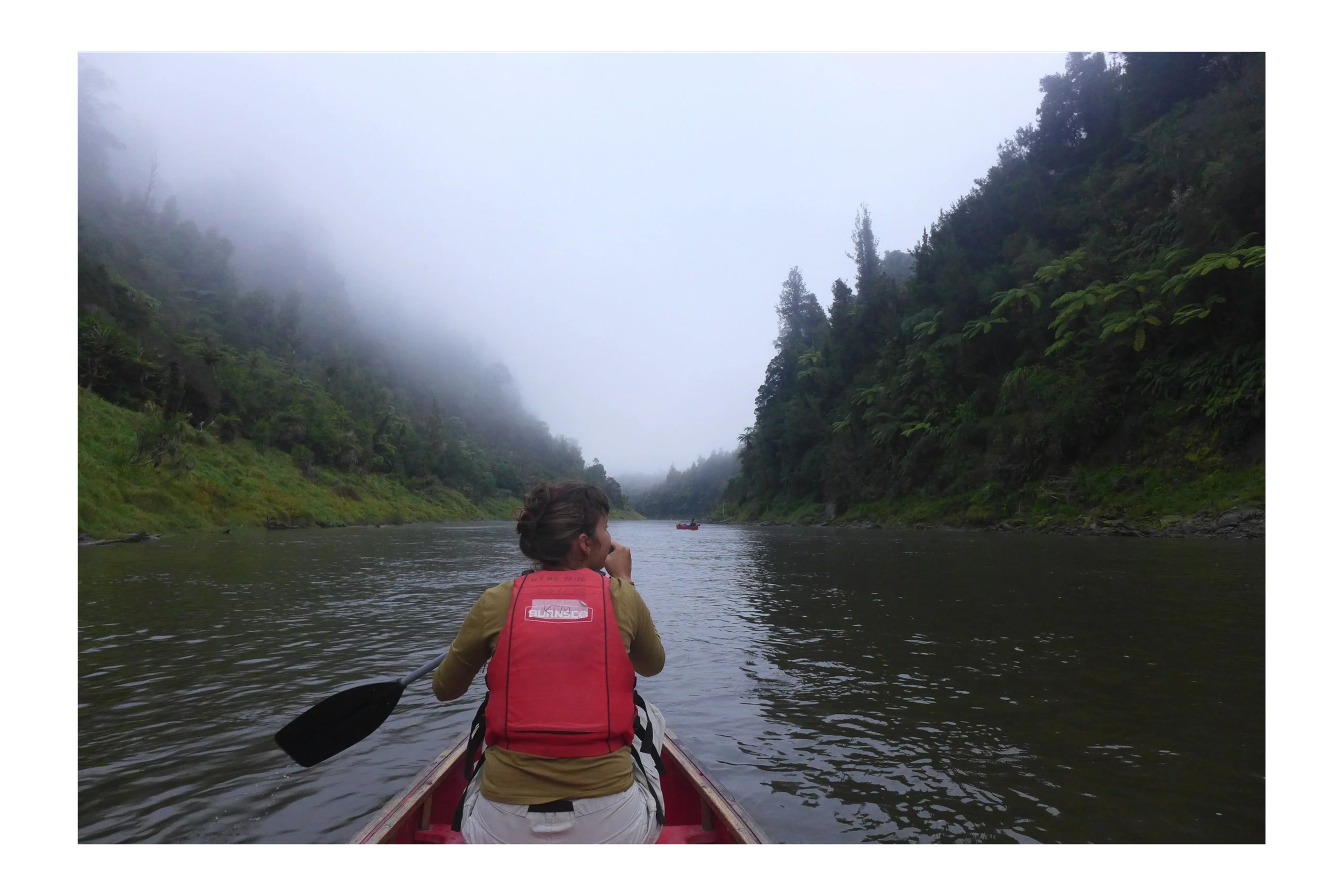
Four months after my encounter with the Coupland River, my time in Aotearoa has been filled with countless interactions with birds, waters, and plants, revealing glimpses into the interconnectedness and interdependence of all life forms. I specifically recall an encounter with a pīwakawaka that made me abandon all previous beliefs that deemed interspecies communication impossible. In my time here, I have grown, anchoring my roots down into the Earth and pushing upward toward the Sky, aware of this incredible, wonderful, and mysterious web of life, where every being communicates with and relies upon one another and of which I am a part. In the midst of this beautiful and timely realisation, a tension remains. One that I had already expressed concerns about during a camping trip with the Coupland River. Back then, I expressed feelings of uneasiness and guilt for ‘taking’ the Earth’s natural resources – firewood and water necessary for our night in the tent (see previous article). I questioned my entitlement to these ‘natural’ resources and felt like a thief, stealing some of the Earth’s gifts without giving anything back in return, not even a whispered thank you.
After much time spent with my bare feet grounded in the soil, conversations with pīwakawaka, manydays and nights spent with the Whanganui River and the ocean, and a thorough engagement with the Potawatomi author Robin Wall Kimmerer, notably her book Braiding Sweetgrass (2013), which forms the basis of most of this essay, I feel ready to address this tension. In the following, I seek to move beyond the mere acknowledgement of our relationships with all other beings to ask how we attend to our relationships with our fellow earthlings.
Besides hanging out with the birds and the algae, I also spent a significant amount of my time in Aotearoa studying in the Auckland University Library. A much more urban environment, leaving little room for animated conversations with pīwakawaka alas. To remedy the lack of more-than-human interactions, I would often take breaks from study sessions to spend time with the ocean. I vividly remember starting to listen to the audiobook of Braiding Sweetgrass: Indigenous Wisdom, Scientific Knowledge, and the Teachings of Plants on a mild summer afternoon at Point Chevalier beach. I distinctly remember the feeling of relief when, in her chapter on strawberries, Kimmerer also expresses uneasiness and ‘unworthiness’ as wild strawberries would gift themselves to her as a delicious, sweet fruit. I find Kimmer’s framing of ‘gift’ particularly useful. She writes:
‘The world is full of gifts simply scattered at your feet. A gift comes to you through no action of your own, free, having moved toward you without your beckoning. It is not a reward; you cannot earn it, or call it to you, or even deserve it. And yet it appears. Your only role is to be open- eyed and present. Gifts exist in a realm of humility and mystery – as with random acts of kindness, we do not know their source.’ (Kimmerer, 2013, p.23).
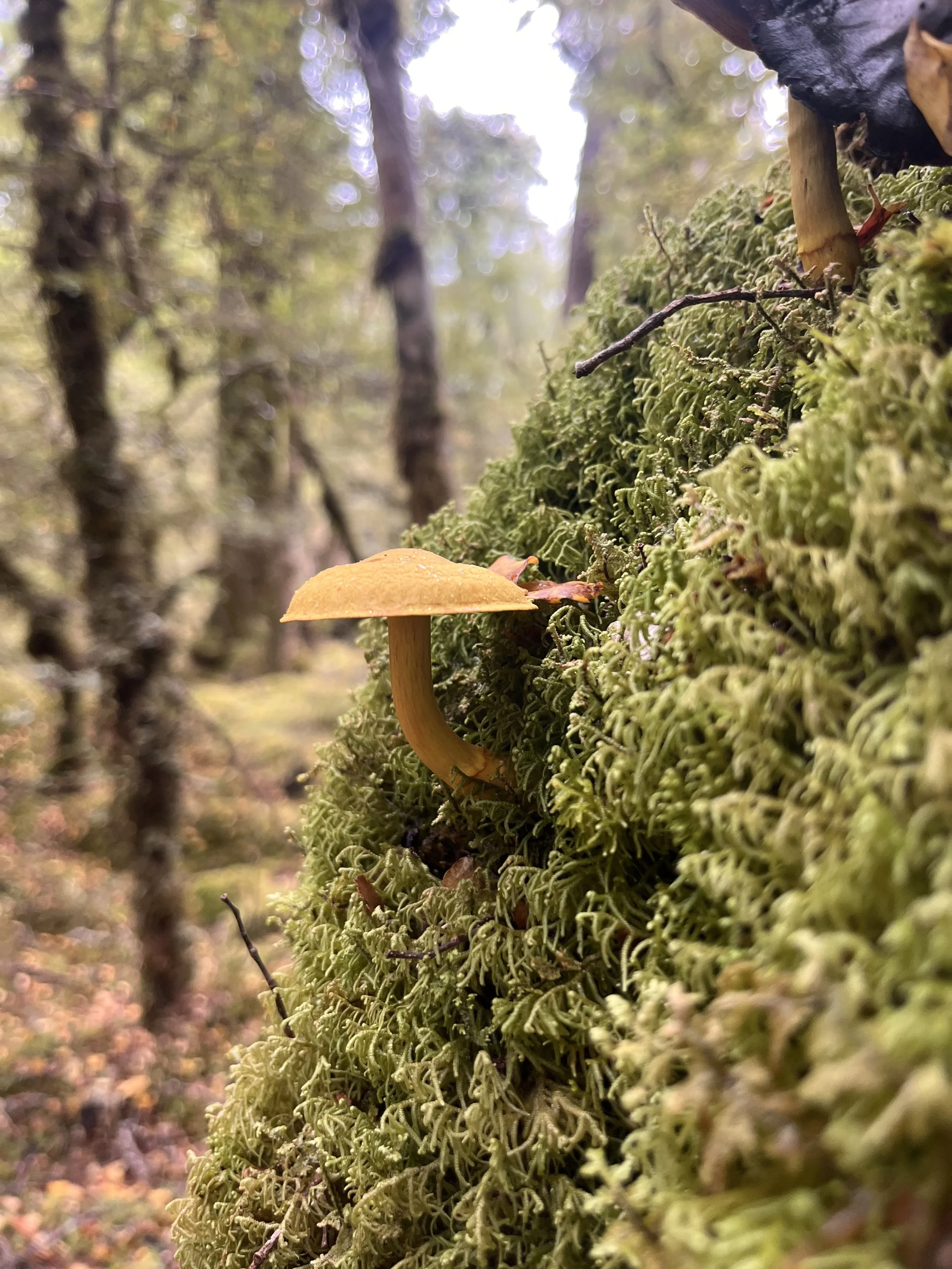
I am perpetually offered the Earth’s gifts, ensuring not only my survival but my deep enjoyment of what she gives me: sweet fruits, bodies of water to swim in, cooling me down on hot summer days, the beauty of the plants and animals, the vibrant colours of blooming flowers, and so many more for me to narrate. Yet, I really only acknowledge this unprompted kindness and generosity when camping. In a situation where the middlemen are cut out, and instead of buying firewood mummified in plastic on the supermarket shelf and water from a plastic bottle, I see them in their raw forms as gifts. Finally, seeing what I would refer to as ‘natural resources’ as gifts prompted feelings of unease, shame, and guilt. Realising that all this time, I have been given gifts of life and never took the time to say thank you.
In our modern world, it is difficult to perceive this relationship with the Earth as one based on unconditional love and gift-giving. Instead, centuries of beliefs in human exceptionalism are legitimising relationships with all other beings based on exploitation, harm and violence to serve humans’ needs only (see my previous article). Kimmerer writes:
‘Something is broken when the food comes on a Styrofoam tray wrapped in slippery plastic, a carcass of a being whose only chance at life was a cramped cage.’ (Kimmerer, 2013, p. 31).
Our relationship with the world is damaged. We have grown blind to the intimate relationships of reciprocity and interdependence between us and all species sharing this Earth. Our man-made[1] market economy is based on theft. When the Earth’s gifts are stolen and sold onto the market economy, there are no relationships between the seller and the consumer beyond a money exchange. Yet, the essence of a gift itself is to create relationships (Kimmerer, 2013, p. 28). Contrary to a market economy, where, if I want a good, I exchange it for money and have no inherent obligations, beyond a polite thank you to the seller. From the moment money is exchanged, our reciprocity ends. But if I am gifted something that changes everything. A gift creates an ongoing relationship. I will write a thank-you card. I will take good care of the gift, and when the time comes, I will make sure to give in return. There is no opportunity for a relationship to be born, nurtured, and to flourish when the Earth’s gifts are sold as commodities in a market economy.
It is no surprise that I only perceived a glimpse into the interconnectedness between all life forms when outdoors, when the Earth’s gift ‘scattered at my feet’, when the price tags were removed, free from individual plastic wrappings, I saw nature in its raw form as a gift. We are still to collectively think of the ways in which we, urban, Western, disconnected dwellers, can reconnect to acknowledging our relationship with the Earth. Having a garden, going camping or rock climbing, having a pet animal, getting a special interest in trees, plants, moss or fungi, anything that gets us outside … but if we imagine for a moment being able to see these relationships, and ‘consider the tree in the Kleenex, the algae in the toothpaste, the oaks in the floor, the grapes in the wine; to follow back the thread of life in everything’ (Kimmerer, 2013, p.154) then how do we start attending to this newly formed relationships? How do we say thank you to the Earth?
I take great inspiration from Māori traditional harvesting techniques. In Aotearoa New Zealand, Māori communities rely heavily on karakia (incantations, prayers, chants), through which relationships with the more-than-human are acknowledged, maintained, and renewed. From my understanding, karakia are used in a variety of contexts, but a common thread is that they seek to guide, protect, or acknowledge relationships between people, places and activities. Karakia can be used before entering a place (forest, mountains or marae), before harvesting or gathering a resource, at the beginning and end of meetings, or during conservation work. Terese explained the importance of karakia before harvesting:
‘If I go into the sanctuary and take kawakawa to make tea, I've got to request it through a karakia. What do I want it for? How much do you think I need? When do I have to use it by to regulate the harvest?’ (Interview Terese, 26.01.206).
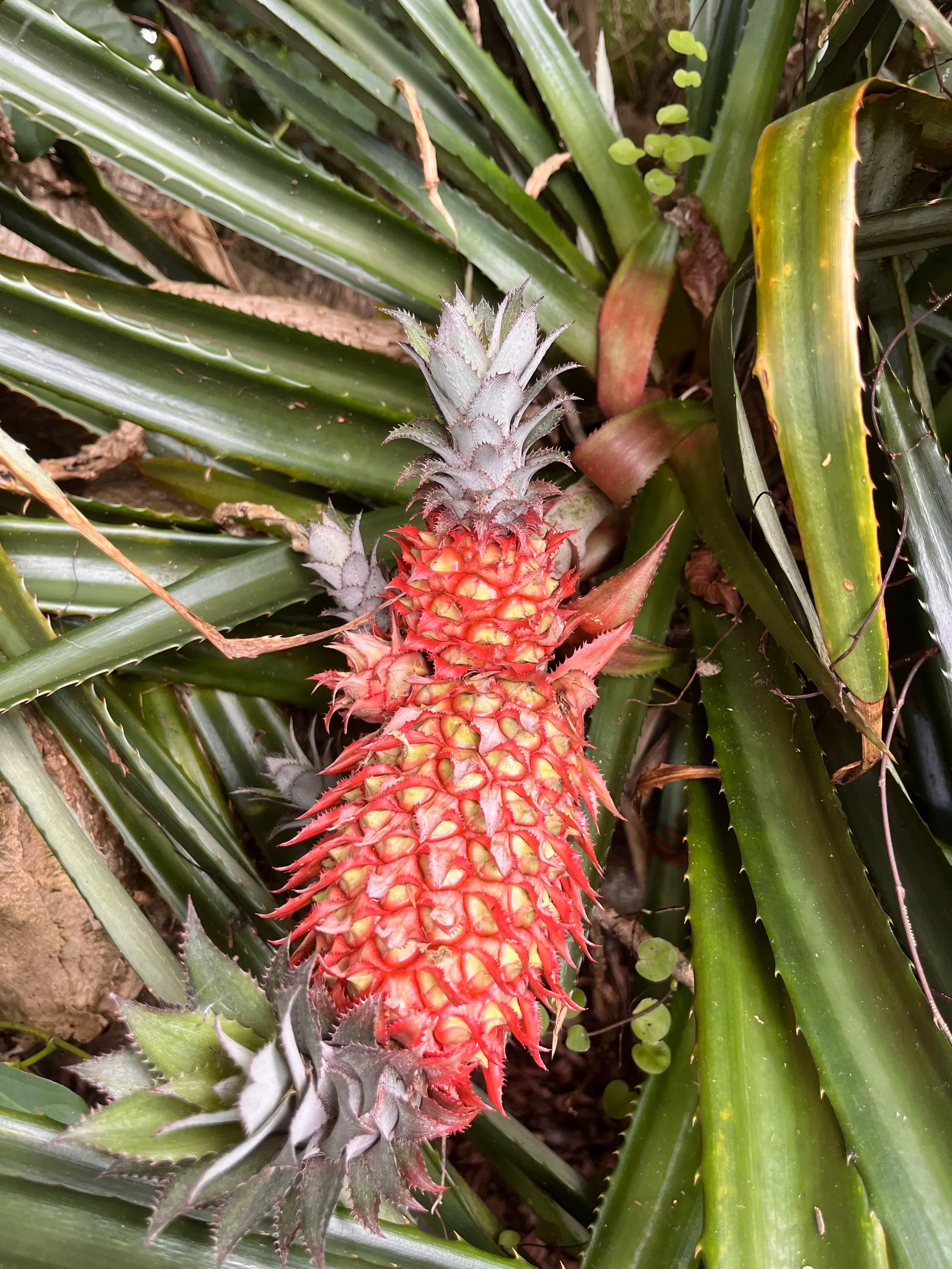
The practice of karakia regulates humans’ entitlement to natural resources and instead points to the reciprocal relationship between human and nature in Indigenous worldviews, where ‘taking’ natural resources ought to be done in a way that enables further regeneration and the thriving of that species, as one way of showing thanks. As Kimmerer states, ‘If an animal gives its life to feed me, I am in turn bound to support its life’ (2013, p. 115).
If one asks for permission to gather, one needs to listen to the answer. Amongst Māori communities, there is extensive historical use of a method called rāhui, which restricts the gathering of key species until specific environmental indicators indicate that harvest can resume. Therefore, karakia and rahuī, in the context of harvesting, go beyond merely acknowledging the interdependence among all species and seek to respect and maintain healthy relationships with them. I wonder how our food systems and lives would look if, before scaring open the Earth to extract its resources, we stopped to ask for permission. Listen to the answer and potentially refrain.
While few of us might be directly involved in producing or gathering food resources, there are many ways to express our thanks to the Earth. While some caution against ‘the arrogance of thinking that we have the capacity to give back to Mother Earth anything approaching what she gives us’ (Kimmerer, 2013, p.238). I follow Kimmerer in thinking that humans have a unique gift for gratitude. In our beautifully diverse humanness, everyone has a different gift to offer in thanks to Mother Earth. The gifts we might return are as diverse as the gifts we receive. ‘Our work is to discover what we can give. Isn’t this the purpose of education, to learn the nature of your own gifts and how to use them for good in the world?’ (Kimmerer, 2017, p.239). I would not pretend to be a particularly gifted writer, but I am certainly a passionate one. I am passionate about sharing thoughts and findings, opening up worldviews that might offer answers to the unprecedented environmental degradation that we are facing, in the hope of finding ways to live well with our terrestrial counterparts. In some ways, this is my way of showing gratitude for the Earth’s gifts.
I concluded my previous article by asking, what experiences might lead your heart to open to the interconnectedness of all beings. I would now like to ask, what are your gifts? What can you offer in return for the Earth’s gifts that might help restore a forgotten cycle of reciprocity between humans and our fellow earthling friends?
[1] Intentional use of gendered language.
Sources
Kimmerer, R. W. (2013). Braiding sweetgrass: Indigenous wisdom, scientific knowledge and the teachings of plants. Milkweed editions.